Food is not a substitute for hormone therapy when hormones are genuinely depleted. But food is where every hormonal protocol begins. The raw materials your body uses to make oestrogen, progesterone, testosterone, thyroid hormone, and cortisol all come from what you eat. And the food choices most disruptive to hormonal balance are the ones dominating the average South African plate.
This article is a practical, South Africa-specific guide to the foods that most meaningfully support hormone balance, why each one works at a physiological level, what to eat instead of the most common hormone disruptors, and how to put it together in a way that is realistic, affordable, and accessible across South African supermarkets and fresh produce markets.
Why food matters for hormones
Steroid hormones, including oestrogen, progesterone, testosterone, cortisol, and DHEA, are all synthesised from cholesterol. Thyroid hormones are made from the amino acid tyrosine and the mineral iodine. Neurotransmitter hormones like serotonin and dopamine depend on tryptophan and phenylalanine from dietary protein. Eating sufficient dietary fat, quality protein, and micronutrient-dense whole foods is not optional for hormonal health. It is the biochemical minimum.
Beyond raw materials, food governs the enzymatic processes that convert, activate, and clear hormones. Cruciferous vegetables contain compounds that support liver oestrogen detoxification. Fermented foods restore the gut bacteria that govern oestrogen recycling. Zinc-rich foods provide the cofactor required for progesterone synthesis and thyroid hormone production. Omega-3 fats reduce the inflammation that disrupts hormonal receptor signalling. Every food choice either supports or disrupts this biochemical environment.
You cannot out-supplement a diet that is actively disrupting your hormones. Food is the foundation. Supplements work best when they are layered on top of a diet that is already supporting, not undermining, hormonal balance.
The most important hormone-supporting food categories
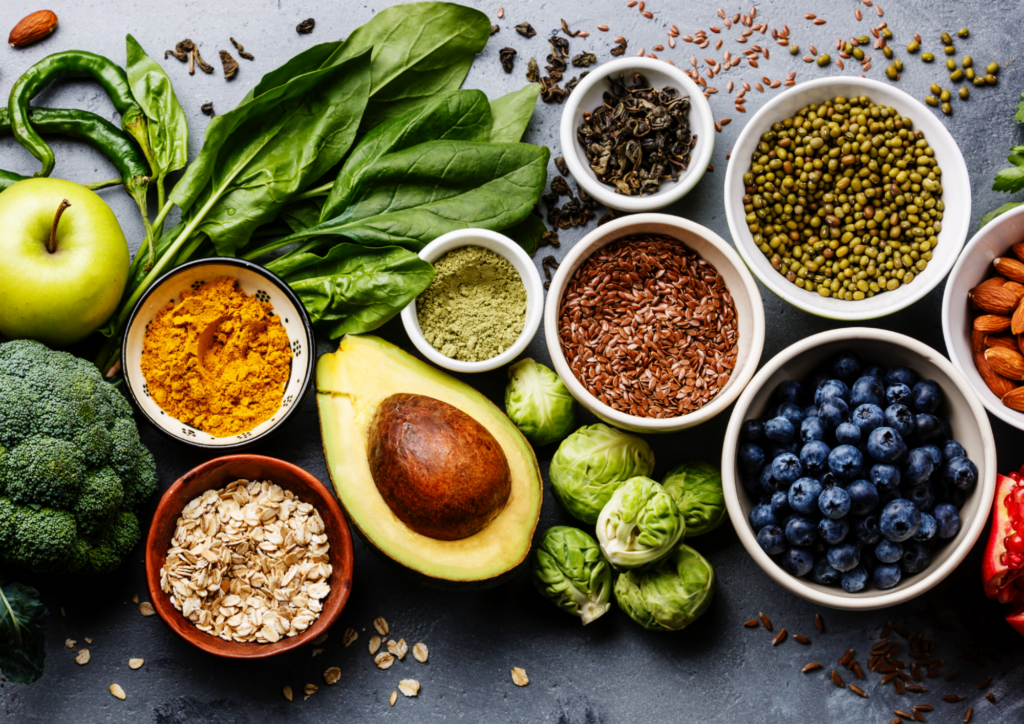
Broccoli, cauliflower, kale, cabbage, and Brussels sprouts contain indole-3-carbinol (I3C) and its metabolite DIM, which support Phase 1 liver detoxification of oestrogen. They promote the conversion of oestrogen toward less potent, anti-carcinogenic metabolites and reduce the oestrogen dominance that drives PMS, heavy periods, and hormonal acne.
South African options: Broccoli and cabbage are available year-round at all major supermarkets and fresh produce markets. Kale is stocked at Pick n Pay, Woolworths, and most health stores. Aim for one to two cups per day, lightly steamed rather than raw to reduce goitrogenic compounds if thyroid function is a concern.
All steroid hormones are synthesised from cholesterol, which is derived from dietary fat. Quality protein from animal and plant sources provides the amino acid building blocks for thyroid hormone, neurotransmitter hormones, and the enzymes that drive hormonal metabolism. A diet that eliminates fat or severely restricts protein reliably impairs hormone production.
South African options: Eggs from free-range producers, grass-fed beef and lamb, chicken with the skin on, avocados (among the world’s best in the Western Cape), raw nuts, olive oil, and full-fat dairy from grass-fed cows where tolerated. Sardines and pilchards in tins are an affordable omega-3 and protein source widely accessible across all income levels.
Zinc is a rate-limiting cofactor in progesterone synthesis, thyroid hormone production, and 5-alpha reductase inhibition. Selenium is essential for the conversion of inactive thyroid hormone T4 to the active T3 form. Both are commonly deficient in South African women due to depleted soil mineral content and low dietary variety.
South African options: Pumpkin seeds (available in bulk at health stores and Woolworths), beef and lamb, eggs, lentils, and chickpeas for zinc. Brazil nuts, canned tuna, and eggs for selenium. Two Brazil nuts daily provide the recommended daily selenium intake. Pumpkin seeds make an accessible, affordable daily zinc source.
EPA and DHA from oily fish reduce the prostaglandin-driven inflammation that disrupts hormonal receptor signalling and amplifies conditions like endometriosis, painful periods, and PCOS. Omega-3s also improve insulin sensitivity, reducing the insulin-driven androgen excess that drives hormonal acne, oily skin, and weight gain around the abdomen.
South African options: Cape salmon, yellowtail, mackerel, and sardines are excellent sources caught locally along the South African coast. Pilchards in tins are one of the most affordable and nutritionally dense hormone-supporting foods available to South Africans across all income brackets. Aim for two to three portions of oily fish per week.
Fermented foods restore gut microbiome diversity and support the estrobolome, the collection of gut bacteria that governs how much oestrogen is recycled versus excreted. Dietary fibre binds oestrogen in the gut and supports transit, reducing the time available for oestrogen reabsorption. Both directly reduce oestrogen dominance through gut-level mechanisms.
South African options: Plain full-fat yoghurt from Woolworths, Pick n Pay, or Checkers, traditional maas (amasi), which is widely available and culturally familiar across South Africa and is an excellent affordable probiotic food. Kimchi and kefir are available at health stores in major cities. Sweet potatoes, legumes, oats, and seasonal vegetables provide accessible prebiotic fibre.
Magnesium is required for GABA synthesis, cortisol regulation, progesterone production, and insulin sensitivity. It is depleted by stress, coffee, alcohol, and refined carbohydrates, making it one of the most commonly deficient minerals in South African adults. Dietary magnesium alone is rarely sufficient to correct deficiency in a high-stress lifestyle, making it one of the most valuable nutrients to supplement alongside dietary improvement.
South African options: Spinach and Swiss chard (widely available and affordable at fresh produce markets), dark chocolate above 70% cacao (Lindt 85% and 90% are widely stocked), pumpkin seeds, almonds, black beans, and avocado. These are all accessible year-round across South African supermarkets and fresh produce markets.
What to avoid or significantly reduce
Foods that disrupt hormone balance
- Refined carbohydrates and added sugar: White bread, pap made from refined maize meal, sugary drinks, and packaged snacks spike insulin, driving androgen excess, oestrogen dominance, and inflammatory prostaglandin production
- Conventional seed and vegetable oils: Sunflower, canola, and soybean oils are high in omega-6 fatty acids that compete with omega-3s and promote the inflammatory prostaglandins that worsen hormonal symptoms
- Alcohol, particularly wine and beer: Impairs liver oestrogen clearance, depletes B vitamins and magnesium, disrupts sleep architecture, and raises cortisol
- Conventional soy products: Soy isoflavones act as phytoestrogens and can amplify oestrogen dominance in women who are already oestrogen-heavy. Fermented soy (miso, tempeh) is far less problematic than unfermented soy milk, soy protein, and soy-based processed foods
- Ultra-processed convenience foods: Contain a combination of refined carbohydrates, seed oils, additives, and xenoestrogenic packaging that disrupts hormonal balance through multiple pathways simultaneously
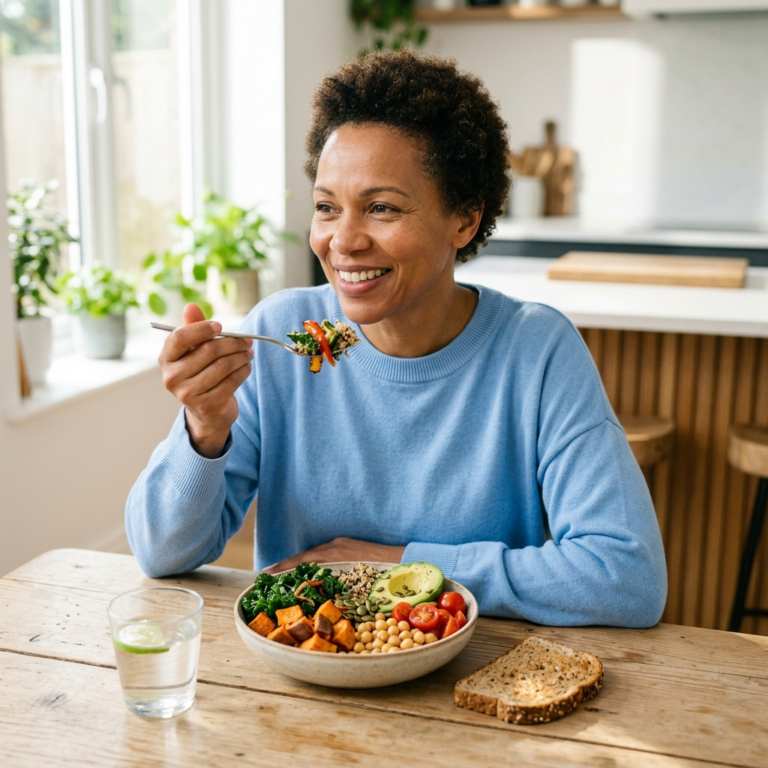
A sample hormone-supporting day of eating in South Africa
Practical, accessible, and affordable
Breakfast
Two free-range eggs scrambled in butter with baby spinach and half an avocado on one slice of sourdough rye bread. Two Brazil nuts on the side.
Mid-morning
A small handful of pumpkin seeds and almonds with a cup of rooibos tea. Rooibos is a South African-specific addition with antioxidant and anti-inflammatory properties that support the adrenal system.
Lunch
Tin of sardines with a large salad of mixed greens, cucumber, cherry tomatoes, and red onion dressed with olive oil and lemon. A cup of plain maas on the side.
Dinner
Grass-fed beef or lamb with a generous portion of roasted broccoli and sweet potato. One to two tablespoons of olive oil in cooking. A small portion of cooked lentils or chickpeas as a zinc and fibre source.
Evening
Two squares of dark chocolate above 80% cacao with a cup of chamomile tea. Chamomile has mild GABA-supportive properties that reduce cortisol reactivity in the evening.
When food is not enough
Dietary change alone rarely corrects significant hormonal imbalance. It reduces the inputs that create the problem and provides the raw materials for recovery, but when nutrient depletion is significant, when oestrogen clearance pathways are congested, or when gut dysbiosis is established, targeted supplementation accelerates and deepens the dietary work considerably.
EstroFactors
DIM and calcium d-glucarate to amplify the oestrogen-clearing effect of cruciferous vegetables through Phase 1 and Phase 2 liver detoxification
View product
OmegaGenics EPA-DHA 1000
High-potency omega-3s to achieve the therapeutic anti-inflammatory dose that dietary fish alone rarely provides in a typical South African eating pattern
View product
Mag Glycinate
Highly absorbable magnesium to correct the deficiency that diet alone cannot resolve in a high-stress, high-coffee, high-refined-carbohydrate lifestyle
View product
UltraFlora Balance
Daily probiotic to restore the estrobolome diversity that fermented foods alone cannot re-establish when dysbiosis is significant
View product
Zinc Glycinate
Highly bioavailable zinc to correct the deficiency that limits progesterone synthesis and thyroid function when dietary sources fall short
View product
PhytoMulti without Iron
Comprehensive phytonutrient-rich multivitamin to fill the micronutrient gaps that even a good South African diet leaves uncovered
View product
The bottom line
Hormone balancing food in South Africa is not exotic, expensive, or difficult to find. It is broccoli, eggs, avocado, sardines, maas, pumpkin seeds, and olive oil, chosen consistently and eaten in a way that supports the body’s own hormonal machinery rather than continuously disrupting it. Start with the foundations. Remove the biggest disruptors. Add the most impactful foods first. Let supplementation fill the gaps that diet alone cannot close.
And if you are not sure which hormonal imbalance is driving your symptoms, the free hormone assessment quiz at Hormone Reset will help you identify your specific pattern so your dietary and nutritional focus is targeted rather than generic.
The most powerful hormone balancing food is not a superfood from an overseas health store. It is a consistent, varied, whole-food diet built from what grows and lives in South Africa, eaten in a way that supports your body’s ability to make, use, and clear hormones efficiently.
OS
Written and reviewed by
Dr Olwethu Sotondoshe
Natural Hormone Health Expert | Integrative Medicine Practitioner | Pr. No. 0980765
Dr Sotondoshe is the founder of Ask Dr Olz and Hormone Reset. Dedicated to root-cause health support, he created Hormone Reset to provide evidence-based, actionable education for those struggling with hormonal, thyroid, and metabolic imbalances. His approach combines integrative medicine, digital health, and natural therapies to help you better understand your health and achieve lasting wellbeing. He consults via telehealth across South Africa and internationally.
Natural Hormone Health
Integrative Medicine
Nutritional Science
Root Cause Diagnostics
Telehealth SA
Medical disclaimer: The information on this page is for educational purposes only and does not constitute medical advice, diagnosis, or treatment. Individual results vary. If you are currently on medication or receiving treatment for any medical condition, please consult your doctor before making changes to your care. In a medical emergency, contact emergency services immediately.