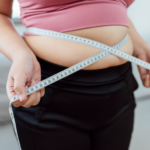

Your arms are the same. Your legs are the same. But something has changed around your middle, and no amount of exercise or calorie restriction seems to shift it. If this sounds familiar, the problem is almost certainly not what you are eating. It is what your hormones are doing with what you eat.
Isolated abdominal weight gain, fat that accumulates specifically around the belly while the rest of the body remains relatively unchanged, is one of the most diagnostically specific presentations in functional medicine. It does not happen randomly. It happens when particular hormonal signals are dysregulated in ways that preferentially drive fat storage in the visceral compartment, the deep abdominal fat that surrounds the organs rather than sitting just beneath the skin.
This article explains exactly which hormonal mechanisms drive belly-specific weight gain, why visceral fat is metabolically distinct from fat stored elsewhere in the body, and what a functional medicine protocol looks like for addressing the root cause rather than just reducing calories.
Visceral fat versus subcutaneous fat: why the location matters
Not all body fat is the same. Subcutaneous fat, the fat that sits directly beneath the skin on the thighs, arms, and hips, is relatively metabolically inert. Visceral fat, the fat that accumulates deep in the abdominal cavity around the liver, pancreas, and intestines, is metabolically active in ways that are clinically significant. Visceral fat produces its own inflammatory cytokines, drives insulin resistance, disrupts hormonal signalling, and is directly associated with elevated cardiovascular risk, type 2 diabetes, and hormonal dysfunction.
The fact that your weight gain is concentrated at the belly rather than distributed evenly across the body is not cosmetically inconvenient. It is a physiological signal that specific hormonal mechanisms are active, and it is one that functional medicine takes very seriously as a starting point for investigation rather than a reason to prescribe a diet.
Isolated belly fat is not a calorie problem. It is a hormonal signalling problem. The location of fat storage in the body is determined by hormones, not simply by how much food is consumed. Treating it with calorie restriction alone almost never works.
The main hormonal drivers of belly fat
Cortisol: the primary driver of belly-specific fat storage
Cortisol is the single most important hormonal driver of abdominal fat accumulation, and it is also the most commonly overlooked. Visceral fat cells have a significantly higher density of cortisol receptors than subcutaneous fat cells in other parts of the body. When cortisol is chronically elevated, it directly activates fat storage in this visceral compartment while simultaneously stimulating appetite, increasing cravings for high-calorie foods, and impairing the body’s ability to use stored fat for energy.
The mechanism is direct and well-established. Cortisol activates lipoprotein lipase in visceral adipose tissue, an enzyme that promotes triglyceride uptake and fat storage in abdominal fat cells. At the same time, it inhibits hormone-sensitive lipase, the enzyme responsible for releasing stored fat for energy use. The net result is a hormonal environment that is simultaneously storing fat in the belly and preventing it from being released, regardless of how few calories are consumed or how much exercise is performed.
Cortisol also drives belly fat indirectly through its effects on insulin. Cortisol promotes insulin resistance in peripheral tissues, raises blood glucose through gluconeogenesis, and stimulates insulin secretion, all of which compound the direct fat-storage signal. For women under chronic occupational, financial, or relational stress, this cortisol-insulin-visceral fat axis is one of the most common and most resistant causes of belly weight gain seen in functional medicine practice.
Insulin resistance: the most powerful metabolic driver
Insulin is the body’s primary fat storage hormone. When insulin levels are chronically elevated due to a high-carbohydrate diet, frequent snacking, blood sugar dysregulation, or the insulin resistance that develops in response to chronic cortisol excess, fat storage is promoted across the body. But visceral fat is particularly sensitive to insulin’s fat-storage signal, and it is also the primary source of the inflammatory signals that drive further insulin resistance, creating a self-reinforcing cycle.
The typical South African dietary pattern, characterised by high refined carbohydrate intake, frequent meals and snacks, sweetened beverages, and processed food consumption, creates a chronically elevated insulin environment that promotes visceral fat accumulation independently of total calorie intake. Women who eat what appears to be a reasonable diet but still accumulate belly fat are frequently experiencing the effects of this insulin dysregulation, not a failure of dietary discipline.
Fasting insulin, rather than fasting glucose, is the most sensitive early marker of this dysregulation. Many women have fasting glucose that appears normal while fasting insulin is significantly elevated, indicating that the pancreas is working hard to compensate for developing insulin resistance. Functional medicine always assesses fasting insulin alongside glucose and HbA1c for this reason.
You can gain significant visceral fat without being diabetic, without eating excessively, and without gaining weight anywhere else on your body. Insulin resistance is the mechanism, and it is detectable well before it shows up as abnormal glucose.
Oestrogen: how hormonal shifts change where fat is stored
Oestrogen plays a significant role in determining where fat is stored in the female body. In reproductive years, adequate oestrogen promotes fat storage in the hips, thighs, and buttocks rather than the abdomen. This is partly protective: peripheral fat stores are less metabolically active and less inflammatory than visceral fat. When oestrogen declines or becomes imbalanced relative to progesterone, fat distribution shifts toward the abdomen.
This shift is most pronounced and most noticeable during perimenopause, when declining ovarian oestrogen production removes the peripheral fat-storage signal. Many women describe gaining weight specifically around the middle during their forties without any change in diet or exercise habits. This is not a lack of discipline. It is a direct consequence of the oestrogen-driven change in fat distribution that occurs as part of the perimenopausal hormonal transition.
Oestrogen dominance, where oestrogen is elevated relative to progesterone, also contributes to abdominal weight gain through fluid retention and through its stimulation of aromatase in visceral fat tissue, which converts androgens to oestrone and perpetuates the hormonal environment that promotes further fat accumulation in this area. This is the same self-reinforcing cycle that drives androgen-related belly fat in men with andropause.
Thyroid dysfunction and metabolic rate suppression
An underactive thyroid reduces the metabolic rate of every cell in the body, including fat cells, muscle cells, and liver cells. When cellular metabolic rate is reduced, the body burns fewer calories at rest, fat oxidation is impaired, and weight gain tends to accumulate gradually and diffusely. The abdominal region is frequently the first and most visible site of this accumulation because of the concentration of cortisol and insulin receptors there.
Hypothyroidism and subclinical hypothyroidism are significantly underdiagnosed in South African women. Many women have TSH levels that sit in the upper end of the conventional normal range while experiencing all the clinical features of thyroid insufficiency, including fatigue, cold intolerance, brain fog, constipation, hair thinning, and weight gain that does not respond to calorie reduction. A full functional thyroid panel is a non-negotiable component of any hormonal weight gain investigation.
Low progesterone, water retention, and metabolic slowing
Progesterone has a mild diuretic and thermogenic effect. It supports thyroid hormone action at the cellular level and mildly raises resting metabolic rate during the luteal phase. When progesterone is low, both of these effects are lost. The result is a tendency toward water retention that can make the abdomen appear larger, combined with a subtle reduction in metabolic rate that compounds over time into meaningful weight change.
Many women notice that their abdominal bloating and apparent belly fat fluctuates with their cycle, being worse in the days before their period when progesterone is at its lowest. This cyclical component is a useful diagnostic clue that low progesterone is contributing to the presentation, and it points toward luteal phase support as a meaningful part of the protocol.
Gut dysbiosis and the metabolic microbiome
Gut dysbiosis contributes to belly fat through several mechanisms. Dysbiotic bacteria produce more efficient energy extraction from food, meaning the same meal yields more absorbable calories when the gut microbiome is disrupted. Gut dysbiosis also increases intestinal permeability and LPS translocation, driving systemic inflammation that promotes insulin resistance and visceral fat accumulation. It disrupts the production of short-chain fatty acids that support insulin sensitivity and the gut hormones GLP-1 and PYY that regulate appetite and satiety.
Women who notice that their abdominal weight gain comes with bloating, digestive irregularity, food sensitivities, or a history of antibiotic use should always have their gut health assessed as part of a comprehensive metabolic evaluation. Restoring a healthy microbiome changes the metabolic environment of the gut in ways that meaningfully support weight normalisation over time.
Targeted nutritional support for hormonal belly fat
Why calorie restriction alone does not work for hormonal belly fat
This is the most important practical point in this entire article. When belly fat is driven by cortisol, insulin resistance, oestrogen shifts, or thyroid dysfunction, reducing calories makes the problem worse, not better. Calorie restriction is itself a physiological stressor that raises cortisol. Elevated cortisol promotes insulin resistance. Insulin resistance promotes visceral fat storage. A woman who reduces her calories significantly in an attempt to lose belly fat may find that her cortisol rises, her insulin resistance worsens, her thyroid function slows further in response to perceived energy scarcity, and her belly fat increases despite eating less than she ever has before.
This is not a failure of willpower. It is a predictable physiological response to treating a hormonal problem with a dietary solution that is not matched to the mechanism. The correct approach addresses the hormonal drivers first: restoring cortisol rhythm, improving insulin sensitivity, supporting thyroid function, correcting oestrogen balance, and restoring gut health. When these systems are functioning correctly, body composition changes follow naturally, often without significant calorie restriction at all.
The bottom line
Weight gain around the belly but nowhere else is not a lifestyle problem. It is a hormonal signalling problem with identifiable, specific, and in most cases correctable drivers. Cortisol, insulin, oestrogen, thyroid, progesterone, and gut health are the six systems most commonly involved, and in most women with isolated abdominal weight gain, more than one of these is contributing simultaneously.
Understanding your specific hormonal pattern is the starting point for everything that follows. The free hormone assessment quiz at Hormone Reset helps identify which imbalances are most likely driving your belly fat, so your protocol can be built around the actual cause rather than a generic weight loss approach that is unlikely to work.
Your belly fat is telling you something specific about your hormones. When you address the hormonal signal rather than the fat itself, the fat responds in a way that no amount of calorie restriction alone can achieve.
Ready to identify the hormonal drivers behind your belly fat and start addressing them at the root cause level?
Take the free hormone assessment quiz