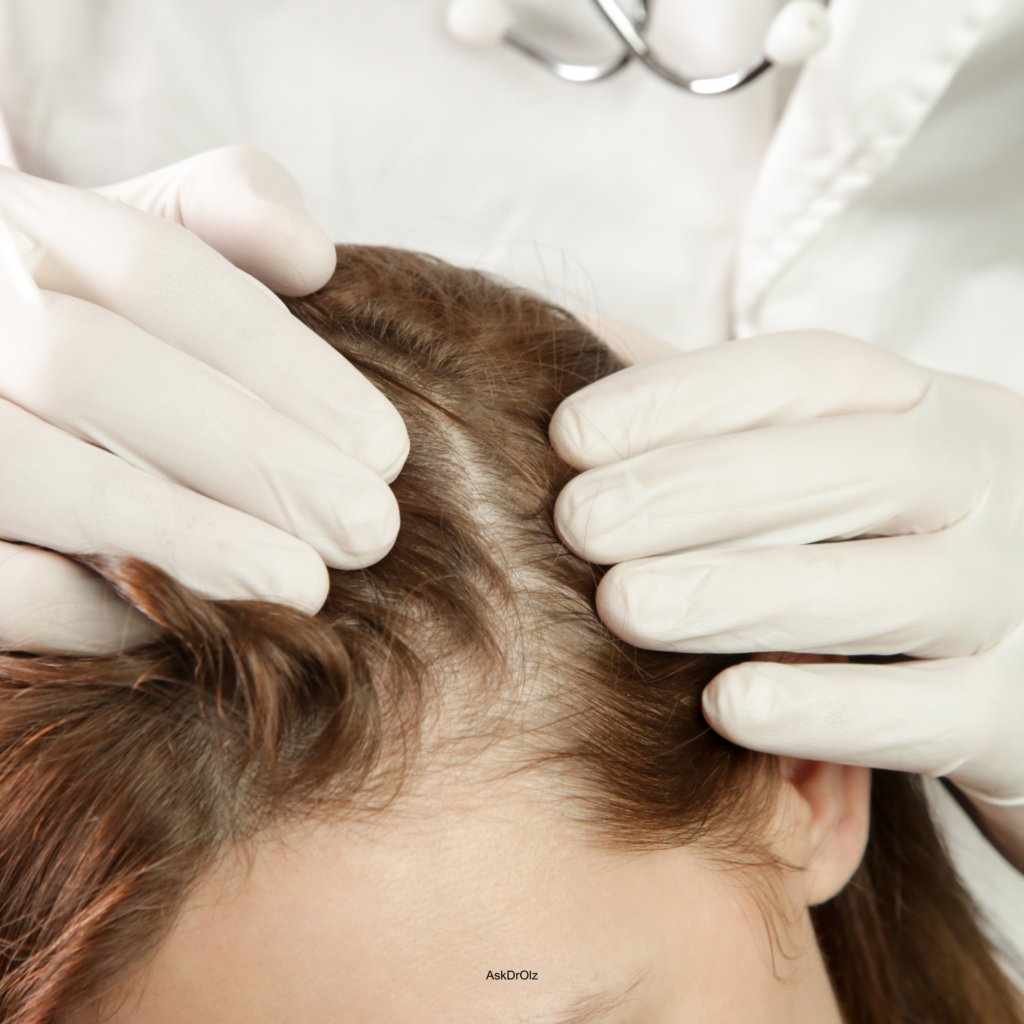
You are losing hair. Not just a little extra in the shower drain — noticeable thinning at the crown, a widening part, or strands collecting on your pillow every morning. And if you have PCOS, there is a very specific reason this is happening.
It is not stress. It is not your shampoo. And it will not be fixed by a biotin supplement.
PCOS-related hair loss is driven by hormonal dysfunction at a root level — and until you address that root, the shedding continues. This article breaks down exactly what is happening inside your body, why conventional treatments often fall short, and what a functional medicine approach looks like when you are serious about stopping the loss and regrowing what you have lost.
Why PCOS Causes Hair Loss: The Hormonal Mechanism
To understand PCOS hair loss, you need to understand one hormone in particular: dihydrotestosterone, or DHT.
DHT is a potent androgen — a male-type hormone — derived from testosterone via an enzyme called 5-alpha reductase. In women with PCOS, excess androgens are extremely common. When those androgens get converted to DHT, they bind to receptors in the hair follicle and trigger a process called follicular miniaturisation.
Here is what that means in plain language:
- DHT shrinks the hair follicle over time
- Each hair grows back thinner and shorter than the last
- Eventually the follicle becomes dormant and stops producing hair altogether
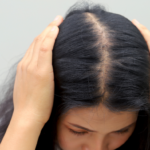
The pattern this creates is called androgenic alopecia — and in women it typically presents as diffuse thinning across the top and crown of the scalp, rather than the receding hairline seen in men. You may also notice more hair at the temples or a part that looks wider than it used to.
This is not the same as telogen effluvium (stress-related shedding), though the two can overlap. PCOS hair loss is chronic, progressive, and hormonal — which is why treating it requires a hormonal strategy.
The Hormonal Drivers Behind PCOS Hair Loss
PCOS hair loss rarely has a single cause. In most women, it is a combination of several interconnected hormonal imbalances:
Elevated Testosterone and DHT
This is the primary driver. Women with PCOS typically have elevated free testosterone — the biologically active form that gets converted to DHT. The higher your free testosterone, the more DHT is available to attack hair follicles.
What raises free testosterone in PCOS?
- Insulin resistance (elevated insulin directly stimulates the ovaries to overproduce androgens)
- Low SHBG (sex hormone binding globulin), which leaves more testosterone unbound and active
- Elevated LH (luteinising hormone), which signals the ovaries to produce more androgens
Low SHBG
SHBG is a protein that binds to testosterone and keeps it inactive. When SHBG is low — which is common in insulin-resistant states — more free testosterone circulates in the bloodstream. More free testosterone means more available DHT. This is a critical piece that most standard blood panels miss because they test total testosterone rather than free testosterone alongside SHBG.
Insulin Resistance
Insulin resistance does not just drive weight gain. It directly raises androgen production by stimulating the ovaries and suppressing SHBG simultaneously — a double hit that accelerates hair follicle miniaturisation. This is why women with PCOS who are a healthy weight can still experience significant hair loss: the insulin-androgen axis is the driver, not the number on the scale.
Thyroid Dysfunction
This one is frequently missed. Hypothyroidism — particularly Hashimoto’s thyroiditis, which has a higher prevalence in women with PCOS — causes hair loss that looks almost identical to androgenic alopecia. It causes diffuse thinning, slowed hair growth, and brittle strands.
If your thyroid has not been fully tested (and a full panel means TSH, Free T3, Free T4, reverse T3, and thyroid antibodies — not just TSH alone), you may be treating the wrong root cause entirely.
Iron Deficiency
Ferritin — the stored form of iron — is one of the most critical nutrients for hair follicle health. Hair follicles are among the most rapidly dividing cells in the body, and they are highly sensitive to nutritional deficiency. A ferritin level below 70 micrograms per litre is associated with significant hair shedding, even when haemoglobin appears normal.
Women with PCOS who have heavy or irregular periods are at particular risk of low ferritin. This is another test that is rarely run in a standard workup.
Chronic Inflammation and Cortisol
Systemic inflammation — which is elevated in most women with PCOS — disrupts the hair growth cycle by pushing follicles prematurely into the shedding phase. Elevated cortisol from chronic stress compounds this by raising androgens further and worsening insulin resistance.
The hair loss you see is often the visible end result of months of internal hormonal disruption.
What Conventional Medicine Usually Offers (And Where It Falls Short)
The standard medical response to PCOS hair loss typically includes one or more of the following:
The oral contraceptive pill — certain pills with anti-androgenic progestins (like cyproterone acetate) can reduce androgen levels and slow hair loss. However, the pill suppresses your own hormonal function rather than restoring it. Shedding often resumes when you stop. It also does nothing for insulin resistance, gut health, or inflammation — the upstream drivers.
Spironolactone — an androgen blocker that reduces DHT activity at the follicle. It can be effective for slowing loss but again is a downstream intervention that does not address root cause. It also comes with side effects including low blood pressure, electrolyte imbalances, and is contraindicated in pregnancy.
Minoxidil (Rogaine) — a topical treatment that stimulates blood flow to the follicle and extends the growth phase. It can support regrowth but requires continuous use and does not address any hormonal driver. Stop using it and the hair returns to its previous trajectory.
None of these are wrong interventions in isolation. But used without addressing the hormonal root — insulin resistance, elevated androgens, thyroid dysfunction, nutrient deficiency — they are managing a symptom while the cause continues unchecked.
A Functional Medicine Approach to PCOS Hair Loss
Functional medicine approaches PCOS hair loss by identifying and addressing every driver that is active in your specific case. Here is what that protocol typically looks like:
Step One: Comprehensive Testing
You cannot treat what you have not measured. A thorough functional panel for PCOS hair loss includes:
- Free testosterone and total testosterone
- SHBG (to calculate the free androgen index)
- DHEA-S (adrenal androgen contribution)
- Fasting insulin and HOMA-IR (insulin resistance score)
- Full thyroid panel — TSH, Free T3, Free T4, Reverse T3, TPO and TG antibodies
- Ferritin (not just haemoglobin — this distinction matters)
- Zinc, selenium, vitamin D, B12, folate
- hs-CRP and homocysteine (inflammation markers)
- Prolactin (elevated prolactin can also drive hair loss and is sometimes missed)
This panel gives you a complete picture of what is driving the loss — and in what combination.
Step Two: Reduce the Androgen Load
Lowering DHT and free testosterone is central to stopping follicle miniaturisation. Evidence-based functional interventions include:
Inositol (Myo-inositol and D-Chiro-inositol) — the most researched natural compound for PCOS. Inositol improves insulin sensitivity, reduces free testosterone, raises SHBG, and has been shown in multiple clinical trials to lower androgen levels significantly. This directly reduces the substrate available for DHT conversion.
Saw Palmetto — a plant extract that inhibits 5-alpha reductase, the enzyme that converts testosterone to DHT. Used topically and orally with encouraging evidence in androgenic alopecia.
Spearmint tea — two cups daily has been shown in clinical studies to reduce free testosterone levels in women with PCOS. Simple and accessible.
Zinc — a natural 5-alpha reductase inhibitor that also supports follicle integrity. Deficiency is common in PCOS and directly worsens androgenic hair loss.
Step Three: Address Insulin Resistance
Since insulin resistance is the engine driving androgen overproduction, correcting it is non-negotiable for long-term hair recovery. This includes:
- A lower glycaemic, higher protein dietary pattern
- Resistance training to build insulin-sensitive muscle tissue
- Berberine or Metformin where clinically appropriate, to improve insulin signalling
- Alpha-lipoic acid and chromium to support glucose metabolism
- Magnesium glycinate — commonly deficient in PCOS and essential for insulin receptor function
For a deeper dive into how insulin resistance drives every PCOS symptom, read our article on PCOS and weight gain on hormonereset.co.za.
Step Four: Restore Key Nutrients for Hair Regrowth
Even after the hormonal picture improves, the follicle needs the right raw materials to recover:
- Ferritin — if below 70, supplementing iron (with vitamin C for absorption) is essential. Do not guess at this — test first, as excess iron is harmful
- Biotin — only useful if you are actually deficient; most women are not, which is why biotin supplements alone rarely work
- Vitamin D — deficiency impairs the hair growth cycle and is extremely common in South Africa despite our sunshine, particularly in women who avoid sun exposure
- Silica and collagen precursors — support the structural integrity of the hair shaft
- B vitamins — particularly B12 and folate, which are essential for cell proliferation in the follicle
Step Five: Reduce Inflammation and Support the Scalp
Systemic inflammation perpetuates follicle damage. Anti-inflammatory strategies include:
- An anti-inflammatory dietary pattern (Mediterranean-style as a framework)
- Omega-3 fatty acids from fish oil — reduce inflammatory prostaglandins that impair follicle function
- N-acetylcysteine (NAC) — reduces oxidative stress in PCOS and has emerging evidence for androgen reduction
- Scalp care: gentle, sulphate-free cleansing; scalp massage to stimulate blood flow; avoiding heat damage during vulnerable phases of regrowth
Step Six: Thyroid and Adrenal Support Where Indicated
If Hashimoto’s or subclinical hypothyroidism is identified, addressing thyroid function is essential before hair regrowth can occur. Similarly, if cortisol is dysregulated, adrenal support through adaptogenic herbs, sleep optimisation, and nervous system regulation is integrated into the protocol.
What to Realistically Expect
Hair has a slow growth cycle — approximately 6 to 12 months to see meaningful regrowth after the hormonal environment has improved. This is why women often feel like nothing is working. What is actually happening in the early months is that the shedding slows, the follicles stabilise, and the regrowth phase begins — it simply takes time to become visible.
Tracking progress with photos every six to eight weeks is far more informative than daily observation, which amplifies anxiety and distorts perception.
Consistency matters more than perfection here.
When to Seek Specialist Support
If you are experiencing:
- Noticeable thinning or a widening part
- Shedding that has persisted for more than three months
- Hair loss alongside other PCOS symptoms (irregular cycles, acne, weight gain around the abdomen)
- Previous blood tests that came back “normal” but you still feel something is wrong
…then it is time to work with a practitioner who understands the full hormonal picture. A standard GP panel is rarely enough to identify the nuanced hormonal drivers described in this article.
You can also read about the broader range of PCOS symptoms in South Africa to understand whether what you are experiencing fits the full clinical picture.
The Bottom Line
PCOS hair loss is not inevitable and it is not permanent — but it will not resolve on its own, and it will not respond to surface-level treatments if the hormonal root is left unaddressed.
The path forward is to test comprehensively, identify your specific drivers, and work through a systematic protocol that targets insulin resistance, androgen excess, nutrient deficiency, and inflammation together.
Your hair can recover. But it needs the right hormonal environment to do so.
Disclaimer: This article is for educational purposes only and does not constitute medical advice. Always consult a qualified healthcare practitioner before starting any supplementation or making changes to your treatment plan.
Concerned about your PCOS symptoms? Book a consultation with Dr Olz at askdrolz.com for a comprehensive hormonal assessment tailored to you.